
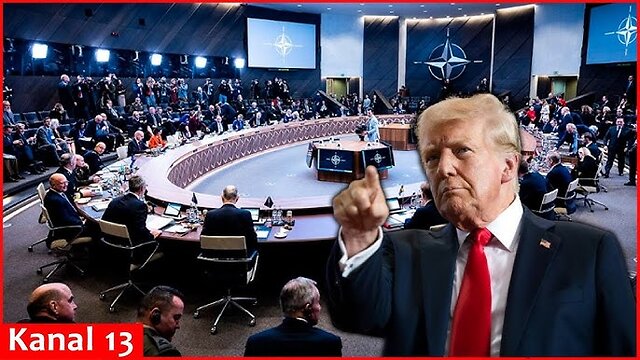
The high-stakes political friction between Washington and Brussels highlights a profound geopolitical shift within the Western alliance, as President Donald Trump accelerates his structural confrontation with North Atlantic Treaty Organization (NATO) member states. Moving far beyond standard diplomatic disagreements, this ongoing campaign to challenge decades-old security frameworks marks a calculated paradigm shift in American foreign policy. As European leadership networks and global defense ministries scramble to stabilize their regional defense positioning, the traditional boundaries of international military deterrence are being radically formalized. Behind the Narrative 4K breaks down the strategic calculations driving the White House maneuvers to uncover who truly stands to benefit from a potential fragmentation of the transatlantic shield.
The America First Architecture and Burden-Sharing Demands
Navigating the complex financial and defensive parameters of modern continental security requires more than historical sentiment; it demands an uncompromising alignment with domestic economic priorities. At the core of the administration's aggressive strategy is a deliberate effort to force European nations into absolute financial accountability regarding their defense expenditure targets. By threatening to condition American protective guarantees on strict burden-sharing compliance, the White House attempts to dismantle what it views as a highly imbalanced security syndicate. This punishing diplomatic isolation provides an essential blueprint for independent geopolitical analysis, proving that the administration treats international military treaties not as sacred covenants, but as transactional business agreements requiring precise fiscal curation and rapid resource recalculation.
The Geopolitical Beneficiaries of Transatlantic Fragmentation
Analyzing the long-term structural fallout of a fractured European defense infrastructure reveals a complex web of strategic winners across global networks within the Kallyz Network framework. A fragmented or weakened NATO directly serves the regional objectives of competing superpowers, most notably Russia and China, who seek to replace unified Western deterrence with decentralized, bilateral diplomatic arrangements. Simultaneously, this pressure forces European core nations to aggressively pursue independent military sovereignty and localized industrial expansion. This synchronized shift demonstrates that modern geopolitical influence relies heavily on professional visual precision and autonomous production speed, shifting market dominance away from traditional globalist bodies and toward aggressive, localized nationalist architectures.
Ultimately, this historic confrontation over Western defense alignment illustrates that the rules of global stability are continuously rewritten by transactional leaders who prioritize economic leverage over legacy treaties. Behind the Narrative 4K is dedicated to bringing you the ultimate digital coverage around the clock. Watch the full video coverage below.





THE EDITORIAL EDIT
TRENDING GLOBAL GEAR | EXCLUSIVELY CURATED FROM THE WEB










.jpg)

0 Comments